

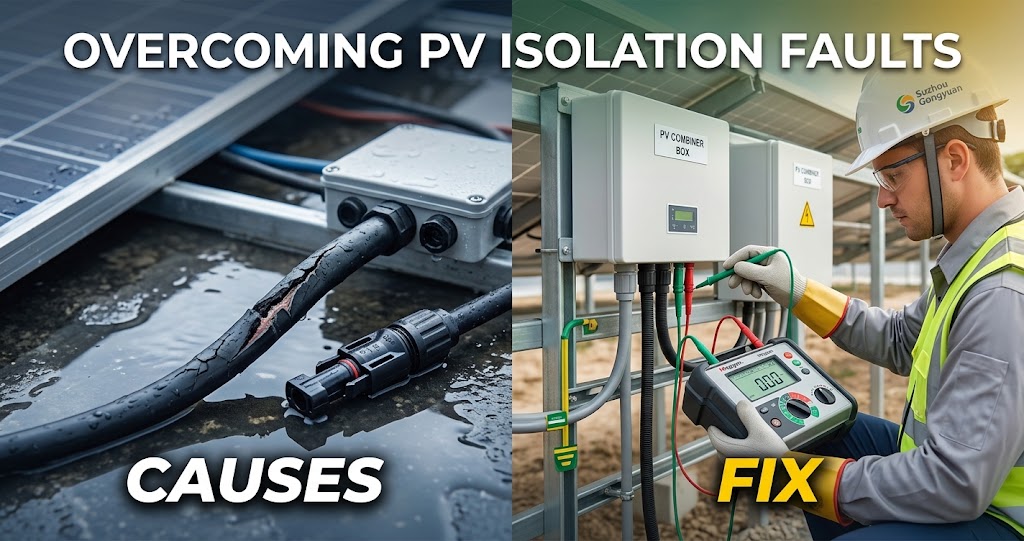
Solar photovoltaic (PV) systems are designed to operate safely and efficiently for many years, but electrical faults can affect their performance and reliability. One of the most common issues reported by solar inverters is a PV isolation fault, also known as an insulation fault or ground fault.
When an inverter detects a PV insulation resistance low condition, it may stop power generation to protect the system, equipment, and people from possible electrical hazards. Messages such as “Riso Low Error,” “Isolation Fault,” or “Insulation Fault” usually indicate that the resistance between the PV DC circuit and earth has dropped below the safe operating level.
Low insulation resistance can happen due to damaged cables, moisture penetration, faulty solar modules, poor installation practices, or aging components. Identifying the exact cause requires proper testing methods, including a PV array insulation resistance test and detailed inspection of the DC side of the solar system.
Understanding what causes a PV isolation fault and how to fix it helps solar installers, engineers, and maintenance teams reduce downtime and maintain system safety.
What Is a PV Isolation Fault?
A PV isolation fault occurs when there is an unwanted electrical connection between the DC circuit of a solar photovoltaic system and the ground or earth.
In a properly working PV system, the positive and negative DC conductors from solar panels should remain electrically isolated from the earth. The insulation surrounding cables, connectors, modules, and other components prevents leakage current from flowing.
When insulation becomes damaged or degraded, current can leak from the PV circuit to the grounding system. The inverter detects this abnormal condition and triggers an isolation fault warning.
Modern solar inverters continuously monitor insulation resistance because a low resistance value can indicate:
- Damaged DC cables
- Water entering connectors or junction boxes
- Cracked solar modules
- Incorrect wiring
- Ground leakage problems
The inverter uses insulation monitoring technology to measure the resistance between the PV array and earth. If the measured value falls below the required safety limit, the inverter prevents operation until the issue is resolved.
What Does Riso Low Error Mean in Solar Inverters?
A Riso Low Error means the insulation resistance of the photovoltaic system has dropped below the acceptable level.
The term Riso refers to insulation resistance. It represents the electrical resistance between the live DC conductors and earth.
A higher insulation resistance value indicates better electrical isolation, while a lower value suggests possible leakage.
For example:
| Condition | Meaning |
|---|---|
| High insulation resistance | PV system operating safely |
| Reduced insulation resistance | Possible insulation degradation |
| Very low insulation resistance | Isolation fault detected |
When an inverter displays an Riso low error, it does not always mean that the inverter itself is damaged. In most cases, the problem exists somewhere in the PV array, cables, connectors, or installation environment.
Common reasons behind an inverter isolation fault include:
- Wet PV connectors after rain
- Damaged cable insulation
- Faulty solar panels
- Poor grounding connections
- DC wiring touching metal structures
Proper troubleshooting is necessary to locate the exact fault location.
Common Causes of Low PV Insulation Resistance
Damaged PV Cables and DC Wiring
One of the most common reasons for PV insulation resistance low is damage to DC cables.
Solar cables are exposed to harsh outdoor conditions, including:
- UV radiation
- Extreme temperatures
- Rain and moisture
- Mechanical stress
- Rodent damage
Over time, cable insulation can crack or wear out. Once the protective layer becomes damaged, the conductor may come close to the mounting structure or earth, creating leakage current.
Common cable-related problems include:
- Cuts or scratches in insulation
- Incorrect cable routing
- Loose cable connections
- Cable pressure points
- Exposed conductors
During maintenance, technicians should carefully inspect all DC cables from the PV modules to the inverter.
Moisture and Water Ingress in PV Components
Water is another major cause of solar insulation faults.
Although solar components are designed for outdoor use, moisture can enter through damaged seals, poor-quality connectors, or improper installation.
Common moisture entry points include:
- MC4 connectors
- Junction boxes
- Solar module frames
- Cable glands
- Inverter DC terminals
When water enters electrical components, it reduces insulation resistance and creates a path for current leakage.
This is why isolation faults often appear:
- After heavy rainfall
- During humid weather
- Early in the morning when condensation exists
If the fault disappears after the system dries, moisture should be considered a possible cause.
Faulty Solar Modules
Solar panels can also create insulation problems.
Although PV modules are designed for long-term operation, failures can occur because of:
- Cracked glass
- Damaged back sheets
- Internal moisture penetration
- Cell degradation
- Manufacturing defects
A single faulty module can reduce the insulation resistance of an entire PV string.
Large solar installations usually require string-by-string testing to identify the problematic module.
Incorrect Installation Practices
Poor installation methods can create long-term insulation issues.
Examples include:
- DC cables placed directly on metal structures
- Incorrect connector assembly
- Damaged connectors during installation
- Missing cable protection
- Incorrect grounding methods
Even small installation mistakes can eventually lead to an inverter isolation fault.
Proper installation following electrical standards helps prevent these issues.
How to Perform a PV Array Insulation Resistance Test
A PV array insulation resistance test is one of the most effective ways to identify insulation problems.
This test measures the resistance between PV conductors and earth.
Technicians normally perform insulation testing using specialized equipment such as insulation resistance meters.
The general testing process includes:
Step 1: Disconnect the PV System
Before testing, the PV array should be isolated from the inverter according to safety procedures.
This prevents inaccurate measurements and protects equipment.
Step 2: Test Positive and Negative Conductors
The insulation resistance between:
- Positive conductor and earth
- Negative conductor and earth
is measured separately.
Step 3: Compare Measurement Results
If one string shows significantly lower resistance than others, it may contain the fault.
Testing individual strings helps narrow down the problem location.
Step 4: Inspect the Fault Area
After identifying the affected string, technicians inspect:
- Modules
- Connectors
- Cables
- Junction boxes
for visible damage.
What Is the Minimum Insulation Resistance PV Systems Require?
The minimum insulation resistance PV value depends on the system voltage, inverter requirements, and applicable electrical standards.
A solar system must maintain sufficient insulation resistance to prevent dangerous leakage current.
Typical factors affecting minimum insulation resistance include:
| Factor | Impact |
|---|---|
| PV system voltage | Higher voltage requires stronger insulation |
| System size | Larger arrays require careful monitoring |
| Environmental conditions | Moisture can reduce resistance |
| Equipment standards | Requirements vary by manufacturer |
Large-scale PV systems operating at higher DC voltages require advanced insulation monitoring solutions to continuously detect faults.
For applications requiring continuous monitoring across different voltage ranges, solutions such as 100~2000V insulation monitoring systems help identify problems before they become serious failures.
How to Fix PV Isolation Fault
Fixing a PV isolation fault requires identifying the source of low insulation resistance.
The most common solutions include:
Inspect and Replace Damaged Cables
If cable insulation is damaged, the affected section should be repaired or replaced.
Temporary fixes may not provide reliable long-term protection.
Replace Faulty Connectors
Damaged or incorrectly installed connectors can create leakage paths.
Technicians should check:
- Connector locking
- Water protection
- Physical damage
- Compatibility
Remove Moisture From Components
If moisture causes the fault, affected components should be dried and inspected.
However, repeated moisture problems usually indicate a sealing or installation issue that needs correction.
Test Individual PV Strings
Large systems should be tested string by string.
This approach reduces troubleshooting time because technicians can quickly identify the problematic section.
Install Continuous Insulation Monitoring Equipment
For industrial and commercial PV systems, continuous monitoring provides early detection of insulation problems.
Devices such as:
help monitor insulation conditions and detect faults before they cause system shutdowns.
Difference Between PV Isolation Fault and Solar Ground Fault
Although the terms are sometimes used together, PV isolation faults and solar ground faults describe slightly different problems.
| PV Isolation Fault | Solar Ground Fault |
|---|---|
| Caused by reduced insulation resistance | Caused by unwanted current flow to earth |
| Detected through insulation monitoring | Detected through ground fault protection |
| Often related to cable or module insulation | Often related to wiring problems |
| Common inverter warning | Electrical protection issue |
Understanding the difference helps technicians select the correct testing method.
For deeper information, you can also read about DC Ground Fault Detection Methods.
How Insulation Monitoring Devices Help Prevent PV Faults
An insulation monitoring device continuously checks the electrical isolation between the PV system and earth.
Instead of waiting until a serious fault occurs, these devices provide early warnings when insulation resistance begins to decrease.
Benefits include:
- Faster fault detection
- Reduced downtime
- Improved electrical safety
- Protection of PV equipment
- Easier maintenance
For solar systems operating at different voltage levels, insulation monitoring solutions provide valuable protection against unexpected failures.
Learn more about How Does an Insulation Monitoring Device Work to understand the technology behind continuous insulation measurement.
Frequently Asked Questions
What causes a PV isolation fault?
A PV isolation fault is usually caused by damaged cables, moisture, faulty solar modules, connector problems, or incorrect installation.
Why does my inverter show Riso low error?
An inverter shows an Riso low error when it detects that the insulation resistance between the PV circuit and earth has fallen below the safe limit.
How do I test PV insulation resistance?
A PV insulation resistance test is performed by measuring resistance between PV conductors and earth using an insulation resistance tester.
Can moisture cause solar isolation faults?
Yes. Moisture inside connectors, junction boxes, or cables can significantly reduce insulation resistance and trigger isolation faults.
What is minimum insulation resistance PV systems require?
The minimum insulation resistance depends on system voltage, inverter requirements, and applicable electrical standards.
How can I prevent inverter isolation faults?
Regular inspection, proper installation, cable protection, and continuous insulation monitoring can help prevent inverter isolation faults.
Conclusion
A PV isolation fault is one of the most common electrical issues in solar photovoltaic systems. It occurs when insulation resistance decreases and creates a possible leakage path between the PV circuit and earth.
Problems such as damaged cables, moisture, faulty modules, and installation errors are common causes of low insulation resistance.
Using proper testing methods, including a PV array insulation resistance test, helps identify the source of the problem quickly. Continuous monitoring solutions also provide early warnings and improve system reliability.
For modern solar installations, maintaining strong insulation performance is essential for safety, efficiency, and long-term operation.
Consult the PV safety page for an overview of electrical hazards and protective practices in solar installations.